Your first interpretation of your partner’s behavior should be in their favor. If he doesn’t call when he said he would, he probably got busy at work. If she is late to the restaurant, maybe traffic was heavier than usual, or she had an unexpected issue to take care of. If he missed acknowledging an important occasion, maybe he had more on his mind than usual. If she is not very affectionate lately, perhaps she is worrying about something or having a bad day. This is not the same as letting major neglect and infractions slide; instead, it is summed up by the adage, “Don’t sweat the small stuff.”
Author: Persecution Live News
3. Generosity includes forgiveness, which is essential for healing and avoiding grudges.
All relationships are full of ruptures and disagreements. Minor infractions are committed often: a confidence broken, a promise forgotten, a complaint that feels like an unfair criticism. Of course, this also means that it’s important that people are willing to apologize, to make amends, and to hear their partner’s complaints without being defensive. When it comes to couples, most conflict arises when people hold on to small issues that evolve into big ones. Certainly, major betrayals require amends and healing. But when smaller annoyances are resolved easily, they leave more room for appreciation, which allows a relationship to thrive. A generous heart facilitates this with much more ease than a stingy one.
2. Developing a spirit of generosity is not about self-sacrifice or scorekeeping.
Giving until it hurts or trying to buy affection does not develop a healthy relationship. True generosity is also not doing things to make yourself feel smug, superior, or to ease guilt. It does not take the place of caring for yourself or expecting your partner to do his or her part. For example, one of the key predictors of marital success is domestic equality in the home. This practice is not about denying your own needs but about understanding that when you give, something powerful happens inside you. Happiness, self-esteem, and well-being are connected to enjoying caring for others.
This Is The Most Important Ingredient Of A Lasting Relationship Linda Carroll, M.S., LMFT Licensed Marriage and Family Therapist By Linda Carroll, M.S., LMFT
July 28, 2018
When researchers from the University of Virginia asked 3,000 men and women what the most important quality in marriage is in 2006, they were expecting the answers to be things like “frequent sex,” “good communication,” and “common interests.” Instead, most of the responders said “generosity.” Surprised? By now, most researchers who study long-term relationships aren’t. In 2014, researcher John Gottman listed kindness and generosity as the two most important elements in a lasting union, and more and more studies1 are linking generosity with happiness in general.
Here are some of the most important things you should know about generosity, especially if you’re looking to apply it to your relationship:
1. If you are not naturally generous, you can learn how to be.
A 2007 study out of Hebrew University showed that some people are programmed to have a more generous nature than others. “The experiment provided the first evidence, to my knowledge, for a relationship between DNA variability and real human altruism,” lead researcher Dr. Ariel Knafo said.
This does not mean you are doomed to selfishness. Think of generosity as a muscle. You can give yourself a kind of “workout.” You start at the gym without much capacity to lift even a few pounds, but over time you build muscle strength. Generosity is the same. It may feel strange and even counterintuitive, but if you want to be generous and act as though you are, you can will yourself to get better at it.
How to Find Freedom From Past Sin and Shame *This post contains affiliate links, which means if you make a purchase through one of my links, I may make a small commission at no additional cost to you. This helps cover the many costs of running this site and allows me to help provide for my growing family. Thank you!
1. Confess Your Sins
If you are a Christian with sin in your life that you have yet to ask forgiveness for, you should feel some degree of guilt or shame. It is this guilt and shame that compels us to turn to God and seek forgiveness.
So start with confession, or admitting your wrongdoings. Be honest with yourself and own up to whatever it is you have done or failed to do. Confess your sins to God first (He already knows about them anyways), and then to whomever your sins have hurt, as well as a fellow sister-in-Christ who can help hold you accountable.
Sin and shame thrive in secrecy. Don’t give them the chance. Get everything out in the open where you can remove it properly.
How to Find Freedom From Past Sin and Shame 🌺 Written by Brittany Ann

If you had the opportunity to change anything in your past, would you? Would you rectify mistakes and start over fresh? Or are you happy with everything in your past just the way it is?
It’s a tricky question, and honestly, I’m not sure how I would answer it personally. While I’m very happy with where I am in life right now, that hasn’t always been the case.
You see, I spent a lot of years being ashamed of my past. Convinced that if anyone knew everything I had been through and done, they wouldn’t like me. That they would reject me, and I’d be all alone.
Can you relate? Have you ever felt that way?
This is actually a topic I dive into way more in-depth in my new book, coming out March 20th. So if you want all the juicy details, you’ll definitely want to check it out to learn more.
But today, I wanted to offer six very practical tips straight from the book for anyone else who may be in the exact same situation I was – tips I really think will help.
Gold King Mansion Mohave County, Arizona A century-old miner’s quarters turned mansion.
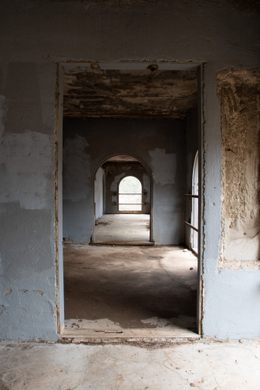
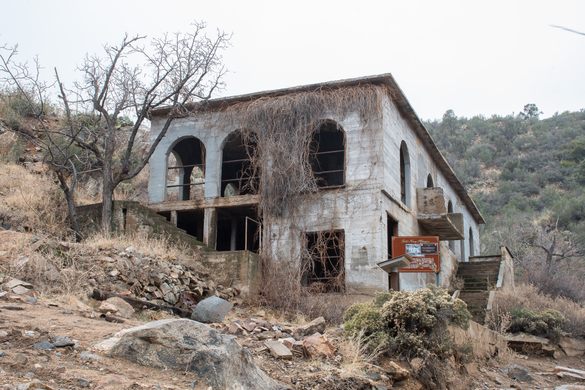
THE GOLD KING MANSION SITS in the Hualapai Mountains in Mohave County, Arizona. Construction on the mansion began in 1930, shortly after a strike had been made on the land in April 1929 and a claim was made to it in July of the same year.
Progress was swift; a camp and road connected to the county highway were built to support the growing operation. As the mine grew, so did expectations as the mine operator, P. M. Woods, reported the company was to install a “big hoist,” “a big gas engine and a compressor… sufficient to operate the drills and pumps,” and an onsite ore mill. The prospective growth of the mine was enticing to financiers who rushed to invest.
At the end of August 1930, the company announced the building “the first of a series of model bunk houses, using reinforced concrete construction.” The houses were, according to the mine superintendent, to “contain an adequate sleeping room to accommodate several miners, a modern bathroom, and be provided with electric light.” Multiple of these bunkhouses was intended to be constructed but come October 1930, the mine found a large workforce unnecessary as the mine resulted in only one of the buildings being constructed.
In 1933, a local rancher John Odie visited the mine and found that the mansion was not used to shelter miners as originally intended. Odie claimed the owners “would take prospective stock buyers up there and wine and dine them and put them up in the house.” The estate was also furnished less like a miner’s quarters and more akin to a resort with elaborate crown molding, copper screen windows, and a concrete fishing pond off the east side of the building.
The mine was not nearly as successful as it once was projected to be as their starting capital of $1 million in 1930 was whittled down to $700,000 in 1933 when the last of the mining took place for the decade.
Despite inactivity between 1934 and 1941, interest in the mine resurged with the beginning of WWII and P. M. Woods resumed operation with a small crew in October 1942. The mine continued to operate through the war and produced gold, silver, lead, and zinc in small quantities. The mine was in use until 1947 but due to economic changes post-war and the death of P. M. Woods in 1948, the property was in limbo.
In 1972, Mohave County historian Roman Malach described the condition of the property and that all doors, windows, and wooden trim had been pilfered but that the ornate fireplace still remained. In 1980 another historian, Joe Blackstock, returned to find the fireplace stolen. Vandalism has remained an issue for the property but Site Stewards and the BLM have taken steps to maintain and preserve it.
Haven Hill White Lake, Michigan Once the extravagant escape of the Ford family, this enigmatic ruin now stands as a haunting reminder of its former glory.
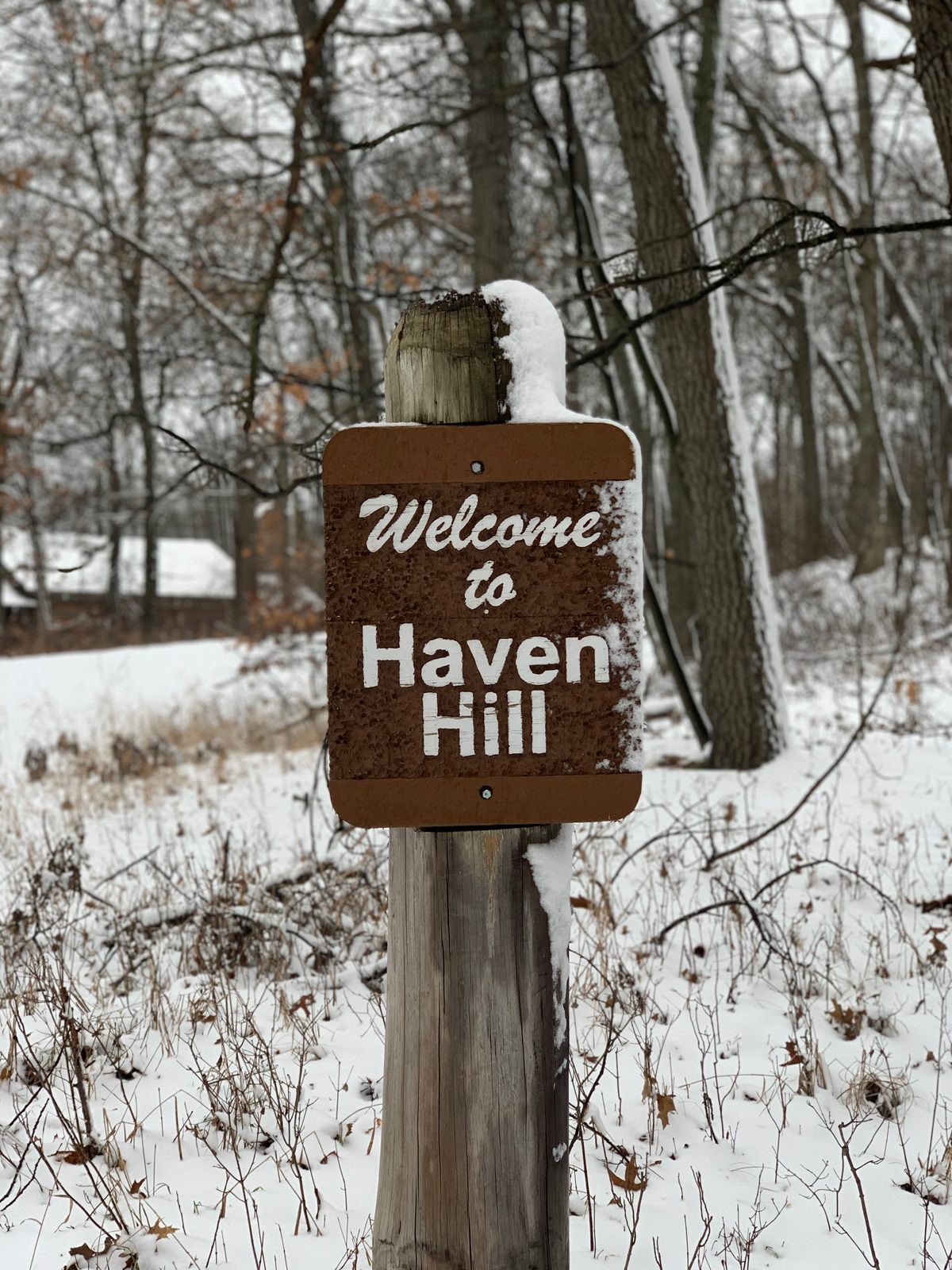

THIS ESTATE, ONCE A SYMBOL of luxury and extravagance, now stands as a testament to the ravages of time and neglect. However, a visit to this secluded haven can still elicit a sense of thrill and excitement, as one embarks on a short but intriguing hike on a paved driveway to reach the dilapidated structure.
Despite the decay that has taken hold of the estate, there are still remnants of its past glory that manage to capture the imagination. A cement base and standing chimney still stand, a stark reminder of a fire that engulfed the property in 1999.
Visitors who venture further into the estate are rewarded with a glimpse into the opulence of the past.
A walk down the trail on the backside reveals a pool and tennis courts that haven’t been touched since the 1980s, frozen in time and untouched by human hands for decades. The air is thick with the sense of history and grandeur that once filled the estate, creating an otherworldly atmosphere that is difficult to describe.
Allen Park Salt Lake City, Utah This former wildlife sanctuary is being transformed into an art park.
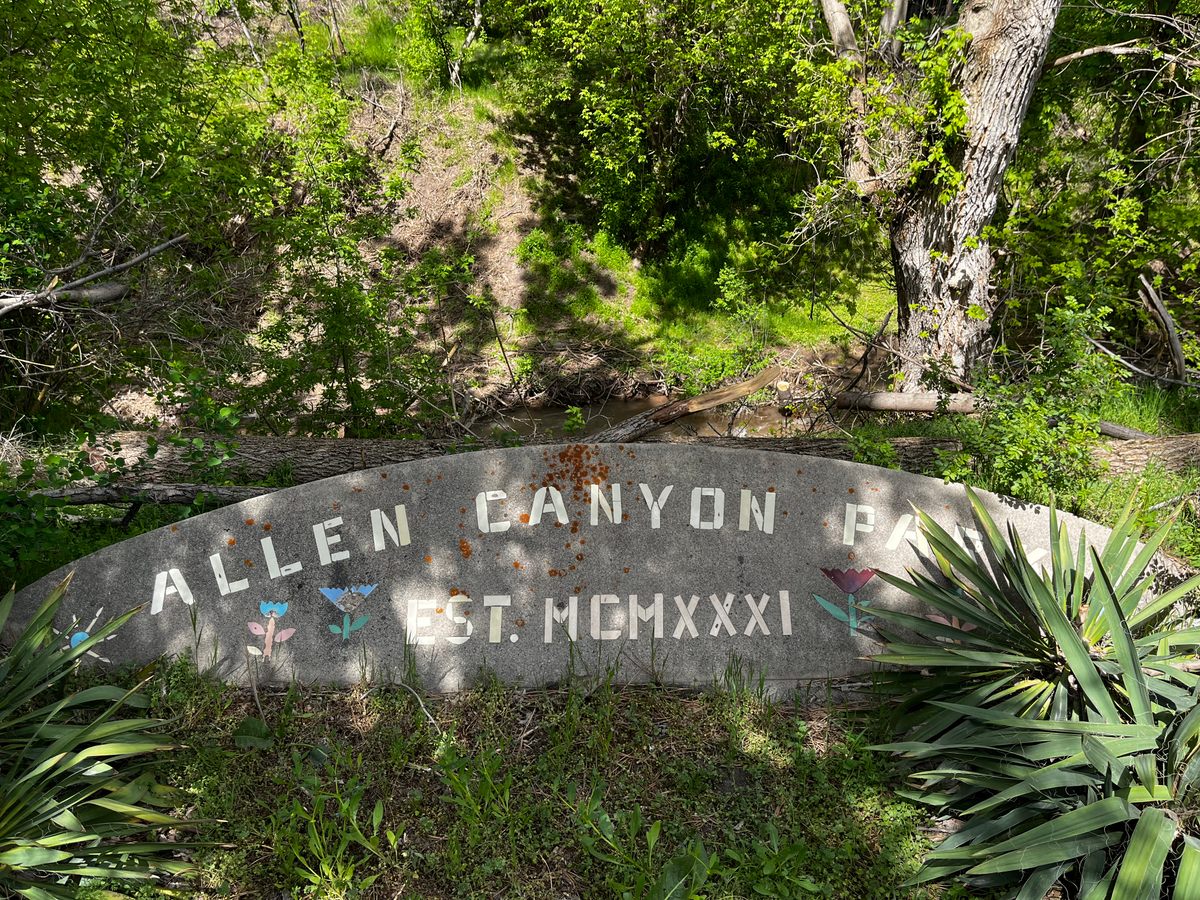
THERE IS A POST-APOCALYPTIC FEELING upon entering Allen Park. All of the abandoned structures are fenced off and in some stage of decay with nature slowly taking back its place. There are small areas where animals were once kept along with the small aviaries. As you stroll in this quiet park there are engraved lampposts and signs filled with poetry mostly dedicated to nature. You pass by a log cabin and a few small homes in varying states of decay.
These buildings were once owned by George Allen, a surgeon and animal lover who lived in the log cabin and rented out the other spaces to students or anyone who wanted to live in such a small space. Allen was a man with great interest in animals, especially birds.
Allen bought the property in the early 1930s and turned it into a bird sanctuary. On Sunday evenings, he would open parts of the park to the public. It was not Allen’s only foray into animal conservation—he played an important role in the establishment of both Hogle Zoo and Tracy Aviary.
The bird sanctuary eventually closed, and the property fell into disrepair. (For a time, it was home to a community of squatters and earned the nickname “Hobbitville.”) But in March 2020, Salt Lake City purchased the land and announced plans to fix up the property and turn it into a public art park. Later that year, the first few portions of the restored park were opened to the public.
Know Before You Go
Check the city’s park website for hours and construction updates.
“Coming Out” – My Journey with Anxiety by Hara Howard

I remember it like it was yesterday. My first panic attack. I was 8 years old, and I felt like I was dying. The worries in my mind had taken over my body and it was as if I had no control over what was happening to me. Growing up, anxiety was not talked about often or understood by most people. The stigma, embarrassment, and shame led me to keep this part of me hidden. On the outside I was a typical child with a bubbly personality. On the inside I was dreading daily life and focusing on the uncomfortable sensations that permeated through my body.
I did not have the tools to either express or cope with my inner struggles. My inner anxiety had so much power and control over my life. It seemed like no one understood, and I felt angry when they didn’t. My journey through my adolescence was similar with the exception of my growing ability to mask my secret better. While I was extremely lucky to have parents who tried everything in their toolbox (psychologists, therapists, etc.) to help me, I realize now that it was not until I accepted my own anxiety that my life was able to take a turn. I say a turn, because that is exactly what living with anxiety feels like (twists and turns, highs and lows). I do give a lot of credit to finding the medication that was best for me. Whether you are a proponent of mitigating measures or not, I strongly suggest being open minded to the possibilities of change that come with anxiety medication.
As I got older, I felt that so much of my life was “ruined” by my anxiety. I couldn’t go back, but I did want to give others what I was missing. I wanted to be a person who DID understand what they are going through. With complete irony, I decided to spend my days in the place that caused me so much anxiety as a child. I am now an elementary school counselor and licensed professional counselor. I promote and educate mental health to all students. I am doing my part to help both struggling students as well as educating compassionate allies for them.
 Persecution Live