Matz Farmstead Ruins Cross Plains, Wisconsin Picturesque and haunting, these 160-year-old stone ruins on top of a bluff are the only remains of a settler’s legacy.

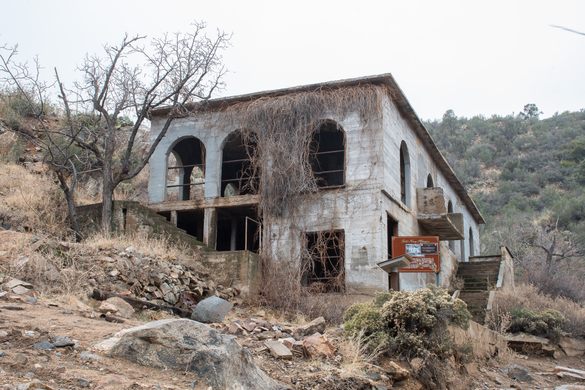
FIRST SETTLED IN 1840, CROSS Plains, Wisconsin is a small town approximately 15 miles west of Madison, the state capital city. A 1920 edition of the Wisconsin State Journal described the town as “nestled in a narrow valley, hemmed in by frowning bluffs.” Situated atop part of these frowning bluffs are the remnants of the Matz Farmstead, which consists of two desolate stone structures, the only remains of German-born settler Friedrich Matz’s built legacy.

Located in the Dane County Halfway Prairie Wildlife Area, these two structures are evidence of early Cross Plains history. In 1842, the village had a total of 13 people. Ten years later, the Matz farmstead was first homesteaded. In the interim years, the village of Cross Plains evolved tremendously.

Spatially, the village was once part of the then-fledgling town of Madison until 1847, when it broke off to become its own town. Built on Ho-Chunk Nation land, the early settler history of Cross Plains is described as being a confluence of Native American, German, Irish, Norwegian, Hungarian, and Mormon cultures. As more people converged upon the territory of Wisconsin, Cross Plains, too, grew. Borders, farmers, hunters and trappers, blacksmiths, and other occupations formed the commercial underpinnings of the town. A governmental system was established with the elections of the first officers in 1847. In 1857, a flour mill was built, receiving a 50-horsepower steam engine in 1875.

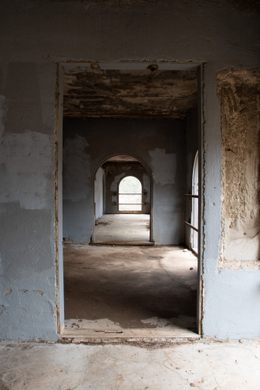
It was amidst this context that Matz set down his roots on the Cross Plains bluffs. Ten years after returning from the Civil War, Matz built the house. He lived there with his wife, Katherina, their son and daughter-in-law, and their grandchildren. Unfortunately, the house burned down in 1949, leaving only the stone parts of the house. Pictures of it show a house built in a traditional vernacular style with two stories. The other extant structure on the former farmstead is an agricultural outbuilding, an astylistic but utilitarian structure likely built for storage. Like many Cross Plains settlers at the time, the Matz family lived off of the land, growing produce such as corn and potatoes, raising oxen, and harvesting hay.

Know Before You Go

You can walk the entire site along the fence line, but there is no official path. Not handicapped accessible. Parking just below the ruins.

Read More

Veteran’s Memorial Bridge Ozark, Alabama Now abandoned, the first reinforced concrete bridge in Alabama still stands over the Pea River.

THOUGHT TO BE THE FIRST in the state, this reinforced concrete river bridge was erected in 1921 over the Pea River and dedicated as a memorial to the 57 Dale Country veterans who lost their lives during World War I. The bridge was used until 1970, when two new bridges were built across the river.

In 1979, the Historic Chattahoochee Commission and the Dale County Historical Society erected a historic marker by the north side of the bridge. The marker was replaced and rededicated on Wednesday, February 2011, by members of Brundidge VFW Post 7055.

The bridge now sits abandoned next to a busy U.S. Highway 231N.  but the location remains a popular river to float with either a small flat-bottom boat or a canoe.

Know Before You Go

Located 9 miles (14.5 km) from Ozark on U.S. Highway 231N. There is parking at the end of the bridge.

Read More

Old Zoo Nature Trails Cisco, Texas Hike the ruins of a zoo that was shut down by an unsolved murder.

THE CISCO ZOO OPENED IN the 1920s, to the delight of residents in rural central Texas. Situated in the shadow of a dam, this small zoo offered visitors a chance to see flamingos, monkeys, bears, and many other animals. Although its selection of animals would have been quotidian by modern standards, the Cisco Zoo was a thrilling experience to visitors.

The fun came to a grinding halt when the menagerie became a murder mystery. A bear was poisoned in an unsolved crime, and a deer died under conspicuous circumstances as well. These and other factors saw the zoo fully abandoned in the 1930s.

Almost a hundred years later, the long-abandoned ruins were repurposed as a hiking trail by the local nonprofit Students, Athletics, Families and Education. Visitors can walk through the rusted enclosures and concrete shelters where the animals were once kept, and even find the remains of what were once offices used by zoo staff. The ruins form an eerie backdrop to an otherwise tranquil 1.5-mile track still in the shadow of the dam.

Know Before You Go

The Old Zoo nature trail doesn’t have a street address listed on most navigation websites and apps. Admission is free, though donations are accepted.

Read More

Gold King Mansion Mohave County, Arizona A century-old miner’s quarters turned mansion.

THE GOLD KING MANSION SITS in the Hualapai Mountains in Mohave County, Arizona. Construction on the mansion began in 1930, shortly after a strike had been made on the land in April 1929 and a claim was made to it in July of the same year.

Progress was swift; a camp and road connected to the county highway were built to support the growing operation. As the mine grew, so did expectations as the mine operator, P. M. Woods, reported the company was to install a “big hoist,” “a big gas engine and a compressor… sufficient to operate the drills and pumps,” and an onsite ore mill. The prospective growth of the mine was enticing to financiers who rushed to invest.

At the end of August 1930, the company announced the building “the first of a series of model bunk houses, using reinforced concrete construction.” The houses were, according to the mine superintendent, to “contain an adequate sleeping room to accommodate several miners, a modern bathroom, and be provided with electric light.” Multiple of these bunkhouses was intended to be constructed but come October 1930, the mine found a large workforce unnecessary as the mine resulted in only one of the buildings being constructed.

In 1933, a local rancher John Odie visited the mine and found that the mansion was not used to shelter miners as originally intended. Odie claimed the owners “would take prospective stock buyers up there and wine and dine them and put them up in the house.” The estate was also furnished less like a miner’s quarters and more akin to a resort with elaborate crown molding, copper screen windows, and a concrete fishing pond off the east side of the building.

The mine was not nearly as successful as it once was projected to be as their starting capital of $1 million in 1930 was whittled down to $700,000 in 1933 when the last of the mining took place for the decade.

Despite inactivity between 1934 and 1941, interest in the mine resurged with the beginning of WWII and P. M. Woods resumed operation with a small crew in October 1942. The mine continued to operate through the war and produced gold, silver, lead, and zinc in small quantities. The mine was in use until 1947 but due to economic changes post-war and the death of P. M. Woods in 1948, the property was in limbo.

In 1972, Mohave County historian Roman Malach described the condition of the property and that all doors, windows, and wooden trim had been pilfered but that the ornate fireplace still remained. In 1980 another historian, Joe Blackstock, returned to find the fireplace stolen. Vandalism has remained an issue for the property but Site Stewards and the BLM have taken steps to maintain and preserve it.

Read More

Haven Hill White Lake, Michigan Once the extravagant escape of the Ford family, this enigmatic ruin now stands as a haunting reminder of its former glory.

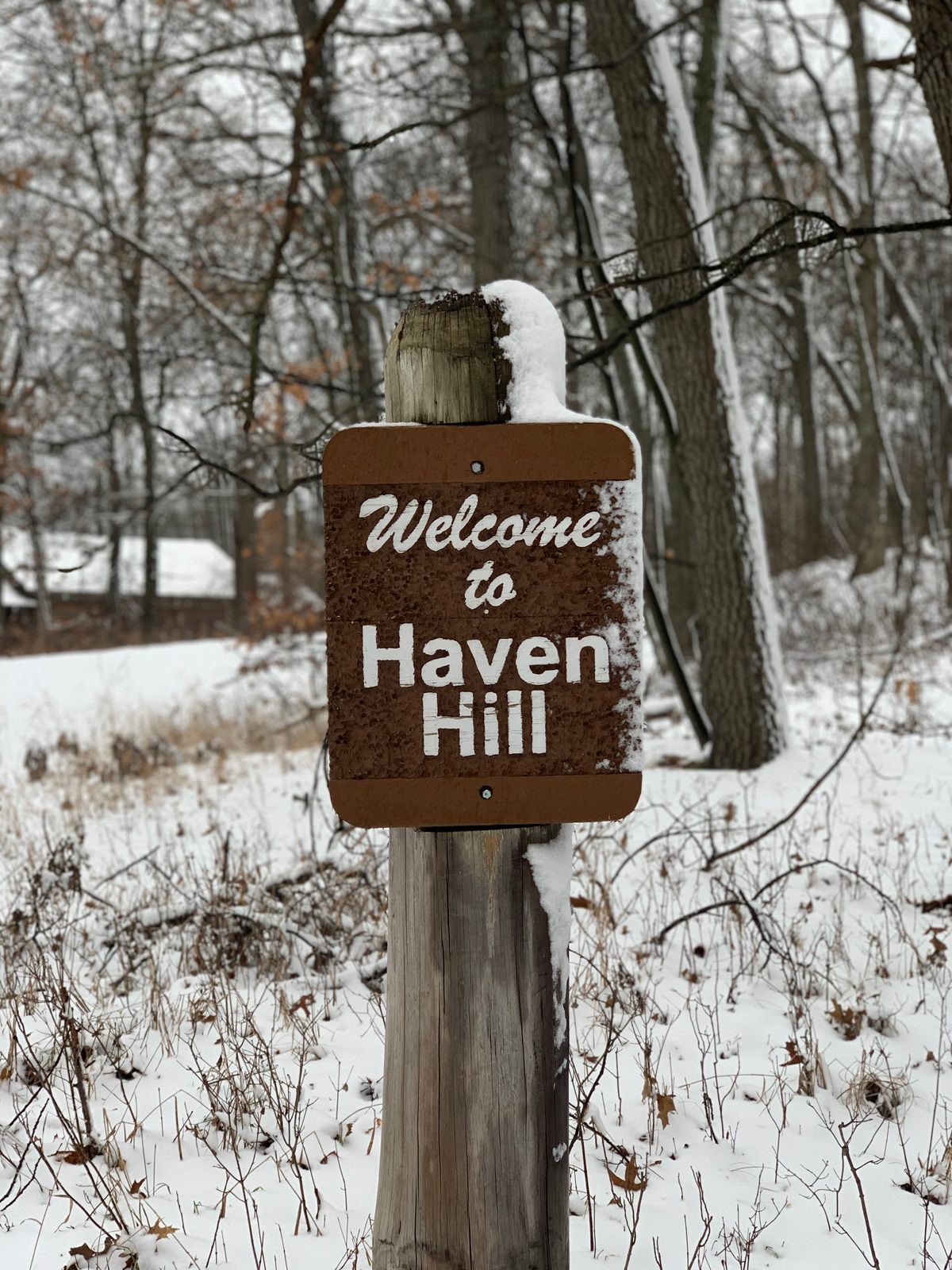
THIS ESTATE, ONCE A SYMBOL of luxury and extravagance, now stands as a testament to the ravages of time and neglect. However, a visit to this secluded haven can still elicit a sense of thrill and excitement, as one embarks on a short but intriguing hike on a paved driveway to reach the dilapidated structure.

Despite the decay that has taken hold of the estate, there are still remnants of its past glory that manage to capture the imagination. A cement base and standing chimney still stand, a stark reminder of a fire that engulfed the property in 1999.

Visitors who venture further into the estate are rewarded with a glimpse into the opulence of the past.

A walk down the trail on the backside reveals a pool and tennis courts that haven’t been touched since the 1980s, frozen in time and untouched by human hands for decades. The air is thick with the sense of history and grandeur that once filled the estate, creating an otherworldly atmosphere that is difficult to describe.

Read More

Allen Park Salt Lake City, Utah This former wildlife sanctuary is being transformed into an art park.

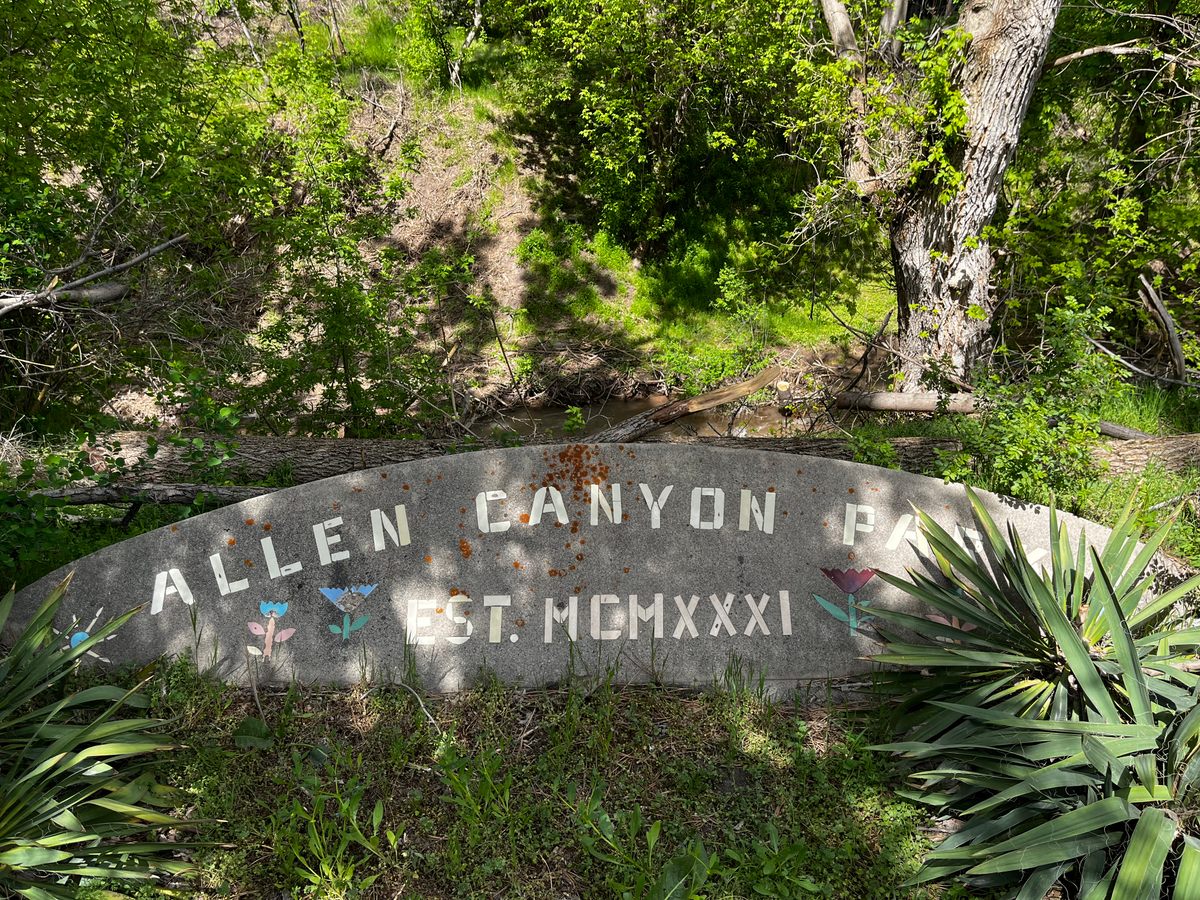
THERE IS A POST-APOCALYPTIC FEELING upon entering Allen Park. All of the abandoned structures are fenced off and in some stage of decay with nature slowly taking back its place. There are small areas where animals were once kept along with the small aviaries. As you stroll in this quiet park there are engraved lampposts and signs filled with poetry mostly dedicated to nature. You pass by a log cabin and a few small homes in varying states of decay.

These buildings were once owned by George Allen, a surgeon and animal lover who lived in the log cabin and rented out the other spaces to students or anyone who wanted to live in such a small space. Allen was a man with great interest in animals, especially birds.

Allen bought the property in the early 1930s and turned it into a bird sanctuary. On Sunday evenings, he would open parts of the park to the public. It was not Allen’s only foray into animal conservation—he played an important role in the establishment of both Hogle Zoo and Tracy Aviary.

The bird sanctuary eventually closed, and the property fell into disrepair. (For a time, it was home to a community of squatters and earned the nickname “Hobbitville.”) But in March 2020, Salt Lake City purchased the land and announced plans to fix up the property and turn it into a public art park. Later that year, the first few portions of the restored park were opened to the public.

Know Before You Go

Check the city’s park website for hours and construction updates.

Inside creepy abandoned hospital with HUMAN BLOOD samples still in the fridge and ‘HELP’ written on the walls

EERIE new images of an abandoned hospital show blood vials still in the fridge and “help” written on walls.

Urban explorer Sonny, 25, stumbled across the deserted facility and spent six hours wading through the forgotten-in-time building.

Eerie images show an abandoned hospital left in disrepairCredit: Jam Press

Sonny, an urban explorer, found blood samples in the hospital fridge Credit: Jam Press

Read More