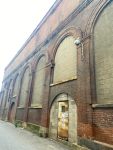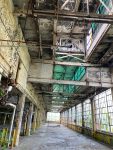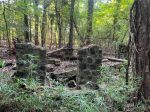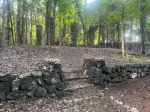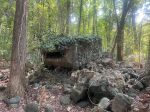
Decatur Waterworks Decatur, Georgia Nature (and graffiti) reclaim this old waterworks that has been surrounded by a bike path and network of walking trails.

This slideshow requires JavaScript.

THE DECATUR WATERWORKS WAS ORIGINALLY built in 1907 and supplied water to the city of Decatur until the 1940s, but had been utilized as a public park since the 1930s, when many amenities like benches, grills, and a stone bridge that crosses over Burnt Fork Creek were added. This same bridge is now part of the trail that connects Medlock Park and Mason Mill Park.

By 1939, the waterworks contained two storage tanks, an office building, two aeration and solid removal tanks, and two dams, one on Burnt Fork Creek and the other on South Peachtree Creek. By 1941 the city had outgrown the water capacity of the waterworks, so the property was leased out to Dekalb County. Dekalb continued to operate the facility and sold water to Decatur. Using the revenue from this venture, they funded a county-wide water treatment plant in Dunwoody, which is currently called the Scott Candler Plant.

The waterworks supplied the Naval Air Station (now Peachtree Dekalb Airport) during World War II. During this time absolutely no recreational use was allowed. When the war ended the waterworks was given back to the city of Decatur and acted as a backup for their new system. While the waterworks were in use, the park was not being maintained or publicly used.

By the early 1950s, the waterworks fell into a state of disrepair due to lack of use. Residents of nearby neighborhoods in the mid-1960s complained of flooding, and in response both dams were broken and the reservoirs were destroyed.

The Decatur Waterworks was declared a historic site in 2006 and shortly after this, the construction of a trail began in 2008. This trail has received funding from the PATH Foundation and has since been completed.

Know Before You Go

The ruins can be easily accessed by going down one of the three trails beginning at Mason Mill Park. Make sure you take the concrete trail with a bridge over the train tracks. It begins next to the tennis court parking lot. You’ll almost immediately see parts of the ruins once on the bridge. Depending on the time of year some parts of the old walls will be more or less visible. If you follow the trail next to the creek upstream you will find one of the old dams and other smaller building foundations. Graffiti changes fairly often and there are frequent land improvement projects. It’s surrounded by a fairly popular bike and walking trail so I would recommend going in the morning on a weekday, if possible. Please avoid walking on the train tracks as they are still very active.
Read More

Majors Stadium Greenville, Texas The home of a former Minor League baseball team that beat Joe DiMaggio’s New York Yankees in 1949.

This slideshow requires JavaScript.

DRIVE NORTH ON NARROW HOUSTON Street in the northeastern section of Greenville, Texas, and you will see a mix of houses and industrial buildings. But at a seemingly random intersection, you will find an old entry gate and a historical marker, which is all that remains of Majors Stadium.

Greenville is located about 50 miles northeast of Dallas. The stadium was home to high school football, followed by a minor league baseball team named the Majors starting in 1946. The stadium and the team were named after World War II hero Truett Majors.

In 1949, the team played an exhibition game against the New York Yankees and won 4-3. Playing in center field was Joe DiMaggio. Pitcher Monty Stratton played in this stadium in 1950 for the Majors. He was portrayed by Jimmy Stewart in the movie The Stratton Story.

Know Before You Go

Google Maps will probably take you to the wrong spot. The approximate coordinates are 33.1410765, -96.1022273, which is on Houston Street, just south of Blades Street. There is not a good place to park, and there is no shoulder on the road. There is a sign stating that you cannot park on the grass. But, the road does not seem to have much traffic.

Go a few feet north of the entry, and you will see a small, brick building. There might be room to park near this building along the fence, and then walk back to the entry.

Read More

Lando School Lando, South Carolina An ornate abandoned schoolhouse hidden in the woods near a decaying mill town.

This slideshow requires JavaScript.

THE LANDO SCHOOLHOUSE WAS BUILT in 1904-5 in the Italian Renaissance revival style for the employees of the Manetta Mill. The school was built in an unusually opulent style for a mill town, which is indicative of the prosperity of the area at the time.

The ruins of the Manetta Mills are very near the Lando schoolhouse along Fishing Creek. The town itself is a shadow of its former self since the closing of the mill in 1992, with only a few residents remaining. The schoolhouse itself was closed down in 1955.

The first floor of the schoolhouse contained classrooms, and the second floor was combination classroom and auditorium. The third floor is just balcony seating which overlooks the stage on the second floor below. Today the school sits abandoned and decaying at the end of Schoolhouse Road.

Know Before You Go

The school can be viewed from the road, but trespassing on the property is prohibited.

Read More

Colonial Iron Mine Nanny’s Mountain York, South Carolina During the American Revolutionary War, iron excavated from this mine was used to make swords, cannons, and more.

This slideshow requires JavaScript.

JUST SOUTHWEST OF CHARLOTTE, NORTH CAROLINA, the ruins of a colonial open-pit iron ore mine are located on the hillsides of Nanny’s Mountain. The mine was operational from approximately 1760 to 1820. Prior to the Revolutionary War, the iron mine fueled early industry in the area and was used to make pots, kettles, and other household items. During the war, the mine supplied ore for cannonballs, round shot, swords, cannons, and other weaponry.

The area around the mine saw several important Revolutionary War battles, including the pivotal battle of King’s Mountain, where American colonists soundly defeated British forces on October 7, 1780. It’s possible that iron from this mine was used to make necessary supplies for the battle and may have made an important contribution to early American history. After the Revolution, some historians believe that this site was a stop on the Underground Railroad.

The mine pits can be viewed and explored along the short trail within the Nanny’s Mountain Historic Site Park. Pictures do not do justice to the size or depth of the pits. Keep in mind that these pits can be a safety hazard, so explore carefully.

Know Before You Go

Nanny’s Mountain is also sometimes spelled Nanny Mountain.

Read More

Ruins of Sir Goony’s Golf Castle Hinesville, Georgia An abandoned putt putt golf course nestled hidden next to one of the local water towers and a local veterinarian.

This slideshow requires JavaScript.

This entry is a stub
Help improve Atlas Obscura by expanding Ruins of Sir Goony’s Golf Castle with additional information or photos.

THIS ABANDONED MINIATURE GOLF COURSE was built in the 1970s. Sir Goonys Gold Castle was a company from Tennessee with multiple courses in the southeast. There is still one open in Nashville.

To find the abandoned site drive southwest on Elma G Miles Pkwy in Hinesville, Georgia until you get to Liberty Animal Clinic off Beatie Blvd. Turn right onto Beatie Blvd and find parking near the fence. You’ll see old the putt putt course to the left of the building and fence.

Know Before You Go

Located off Elma G Miles Pwky and Beatie Blvd in Hinesville, Georgia. Located on the property of Liberty Animal Clinic.

Read More

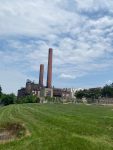
B.F. Goodrich Co. Smokestacks Akron, Ohio This former factory has deep ties to rubber production in Akron.

This entry is a stub
Help improve Atlas Obscura by expanding B.F. Goodrich Co. Smokestacks with additional information or photos.

FIRST BUILT BY THE DIAMOND Match Co. in 1861, this coal power plant was later acquired by the B.F. Goodrich Tire Co. in the booming rubber city of Akron in 1870.

An integral, yet abandoned part of the Akron skyline that is often overlooked. Much of the city’s history in rubber can be tied back to this structure and the few remaining buildings of the Goodrich factory complex.

Read More

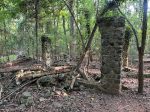
Carhartt Mansion Ruins Rock Hill, South Carolina The ruins of this once-grand mansion are linked to one of the country’s most popular clothing brands.

IN THE WOODS OUTSIDE OF Rock Hill, South Carolina, stand the crumbling ruins of a once-grand house. Just a few years after it was completed its owner, Hamilton Carhartt, was killed in an automobile accident in 1937.

The founder of the Carhartt clothing company lived in Michigan, but had a second home built in Rock Hill because Carhartt owned a large cotton mill in the town. The clothing company employed many of the townspeople in the early 1900s, though this was only one of several major mills that supported the town’s economy.

After Carhartt died, the property was left vacant for a time. New owners came in and tried to restore the property and its grounds, but the site was eventually deserted. Now all that’s left is the crumbling remains of the once-grand mansion.

Today, Carhartt clothing is one of the most popular brands in America, though the company no longer has a presence in Rock Hill. This mansion now sits in ruins along the mountain bike trails of what is now the Riverwalk neighborhood. Numerous ruined structures can be freely explored by anyone willing to hike or bike to the location.

Read More

Smokestacks will remain as brownfield funds pave way for trails, housing in Summit County Shannon Coan Akron Beacon Journal

Eleven brownfield sites ranging from cornerstones of Akron’s history as a rubber capital to locations with names familiar to generations of Summit County families will get millions of state dollars for clean-up and redevelopment.

In Akron, parts of the first rubber business in the city — the former B.F. Goodrich power plant located in downtown Akron — are set to be remediated by removing asbestos and demolishing unsafe buildings.

Portions of Building 59, an older building on the west side of the canal next to the smokestacks, are slated for demolition.

“Right now, it’s very unsafe in there,” said Brad Beckert of Akron’s Office of Integrated Development. “We can’t do a whole lot inside because the building is in such a bad shape. We don’t want people to get hurt doing anything in there.”

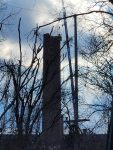
The two iconic B.F. Goodrich brick smokestacks in downtown Akron are safe, though, for now.

Beckert said the city will probably have to take the smokestacks down eventually, but that it wasn’t in the plans for this project and there wasn’t a timeline for when it might happen.

“Those are something that eventually we would have to take a look at because they’re not in great shape either,” he said.

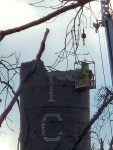
Changing skyline:B.F. Goodrich smokestack getting cut in half to ‘RICH’

The efforts are part of the Ohio Brownfield Remediation Program, which provides funds for the remediation of brownfield sites in Ohio that are underutilized due to a known or potential release of hazardous substances. A brownfield is any previously developed land that is not currently in use.

The program will provide nearly $350 million in grants across the state. Almost $20 million has been distributed to projects in Summit County so far.

“We’re not creating any new land anymore, so we have to reutilize land. A lot of these brownfield areas — which are in the central city — are prime locations for, as I’ve described, for residential or commercial structures,” Beckert said. “It’s very important for us to be able to clean these up and to make them usable for developers to commit to reuse the property within the city.”

Akron received nearly $5 million from the state for remediation at the former power plant. The city currently does not have a specific plan for what the site will be used for once it’s cleaned up, but Beckert said there are multiple developers interested in the property and it could be turned into a residential or commercial structure.

Demolition of Building 59 will hopefully start at the end of this year or the beginning of next, Beckert said. The property will likely not be ready for redevelopment until the middle of 2024.

Read More

Black River Ghost Ship Lorain, Ohio A former Canadian automobile ferry mysteriously appeared in the Black River 20 years ago, and now it quietly rusts away.

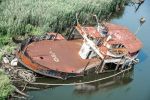
UNDERNEATH THE LOFTON HENDERSON MEMORIAL Bridge on the banks of the Black River outside of Cleveland, lies a bit of a nautical mystery for the residents of Lorain, Ohio. Slowly sinking into the muddy water along the shore and listing to one side, rusting away a little more each season, is the “ghost ship,” a 90-foot long Canadian automobile ferry that mysteriously appeared docked under the bridge sometime around 2003.

Though rumors abound, no one in the city government has been able to locate the person who owns this beautiful piece of history, and so, for the last 20 years, the ship has remained where it dropped anchor all those years ago.

In peeling white paint across the ship’s bow, one can still read the name “Upper Canada,” and records exist of the ship being active from her construction in 1949 (under the name the “Romeo and Annette”) to the late 1990s in various ports in Canada. But no one has been able to locate her final owner.

When the ship first appeared sometime around 2003, the Coast Guard inspected the ship to make sure that it did not pose any environmental issues, such as ensuring it wasn’t leaking oil or other hazardous chemicals.  Since that initial inspection back in the early 2000s, the boat has begun taking on water, which has led to gasoline and oil seeping into the Black River.

In January 2023, the Coast Guard put floating booms around the decrepit vessel to ensure that nothing floated out of the sinking hull to contaminate the river.

No one knows what will happen to the ship. But, for now, it serves as a decaying piece of maritime history that is well worth the walk to the top of the bridge in Lorain to view!

Know Before You Go

Parking is available in an empty lot below the approach to the Lofton Henderson Memorial Bridge. Sidewalks lining the bridge offer views of the ship below. Be careful; traffic here is plentiful and brisk. Plenty of overhead photographic opportunities can be had from the bridge above the ship as well as fantastic views of the Black River.

Read More


Redstone Coke Ovens Carbondale, Colorado Once owned by the largest employer in Colorado, these ovens have been abandoned for over a century.

COKE IS A NEARLY PURE carbon product made from coal that is critical in many industrial processes, steel-making in particular. It is made by carefully heating coal in an oxygen-poor environment to drive off volatiles, all while not igniting the carbon. Typically the coal is placed in an enclosed chamber, a so-called coke oven, to smolder for about a day. Then the finished coke is doused with cold water to stop any further combustion, at which point it can then be shipped to the ultimate market.

These ovens were built in 1899 by Colorado Fuel and Iron to process high-quality, almost ash-free coal that was ideal for coke manufacture. The deposit was in Coal Basin, some 2,200 feet higher, and the raw coal was brought down by a narrow gauge railroad, while the finished coke was shipped out by standard gauge.  The adjacent Crystal River provided abundant cold water for quenching the hot coke.

Some 249 ovens were built and peak production briefly reached 6 million tons annually in the first years of the 20th century. In fact, some 10 percent of workers in Colorado at that time worked here. The large scale of operation was very short-lived, however; the company had financial problems by 1904, and then transportation to the intended end-use at the mill in Pueblo proved to be too expensive. The operation completely shut down in 1908.

The abandoned ovens immediately began to deteriorate, and their deterioration was worsened by pillaging for materials. The steel supports were also salvaged in the scrap drives of World War II, which further hastened the destruction.

Not till 1990 were the coke ovens belatedly recognized as a historic site. At present 90 ovens survive reasonably intact, and in recent years several have been restored.

Know Before You Go

The ovens are off Colorado State Route 133 across from the village of Redstone, originally the old company town. There is parking right off the highway.

Read More