

Architecture of Mesopotamia, wood engravings, published in 1893.
Then, in 1812, the unique ruins of Petra were “discovered” by Swiss explorer Johann Ludwig Burckhardt. He described the ruins of the once-great city in chronicles of his travels.
With the western world now aware of their existence, they soon attracted the interest of architects and scholars, among others. Starting in 1929, British archaeologists Agnes Conway and George Horsfield, as well as scholars Tawfiq Canaan and Ditlef Nielsen, launched a formal project to excavate and survey Petra.
Numerous findings have been made in the decades since, including the 1993 discovery of Greek scrolls dating to the Byzantine period as well as the more recent documentation via satellite imaging of a previously unknown monumental structure buried beneath the sands of the area.
When Petra was named a UNESCO World Heritage Site in 1985, Petra Bedouin tribespeople who had made homes for themselves within the city’s remaining ruins were forcibly relocated by the Jordanian government.
In the early 2000s, the site was named one of the “Seven New Wonders of the World,” leading to a spike in tourism. Since then, efforts have been made to protect the ruins of Petra from heavy tourism, as well as damage from floods, rain and other environmental factors.
–

When the tribe built Petra, though, they developed a unique system of conduits, dams and cisterns to harvest, store and distribute rainwater for year-round use.
At certain times of year, the area around the city was prone to flooding. However, the Nabateans were able to effectively control these floods using dams and, therefore, the city’s water supply.
This meant that they could reside in the city even during periods of drought. It also improved the crop yields of Nabatean farmers.

The Nabateans living and trading in Petra soon accumulated a significant amount of wealth, and an envious Greek Empire attacked the city in 312 B.C. This event marks the first reference to Petra in recorded history.
The Nabateans successfully fought back the Greek invaders by taking advantage of the mountainous terrain surrounding the city. The mountains effectively served as a natural wall, buttressing Petra.
However, the Greek incursion was not the last time the city would come under attack.
In fact, the Romans would invade Petra in 106 A.D., and ultimately forced the Nabateans to surrender. The Roman Empire annexed the newly gained territory and changed its name to Arabia Petraea.
They continued to rule over the city for more than 250 years until the middle of the fourth century A.D., when an earthquake destroyed many of its buildings. The Byzantines eventually took control of the region, and governed Petra for some 300 years.

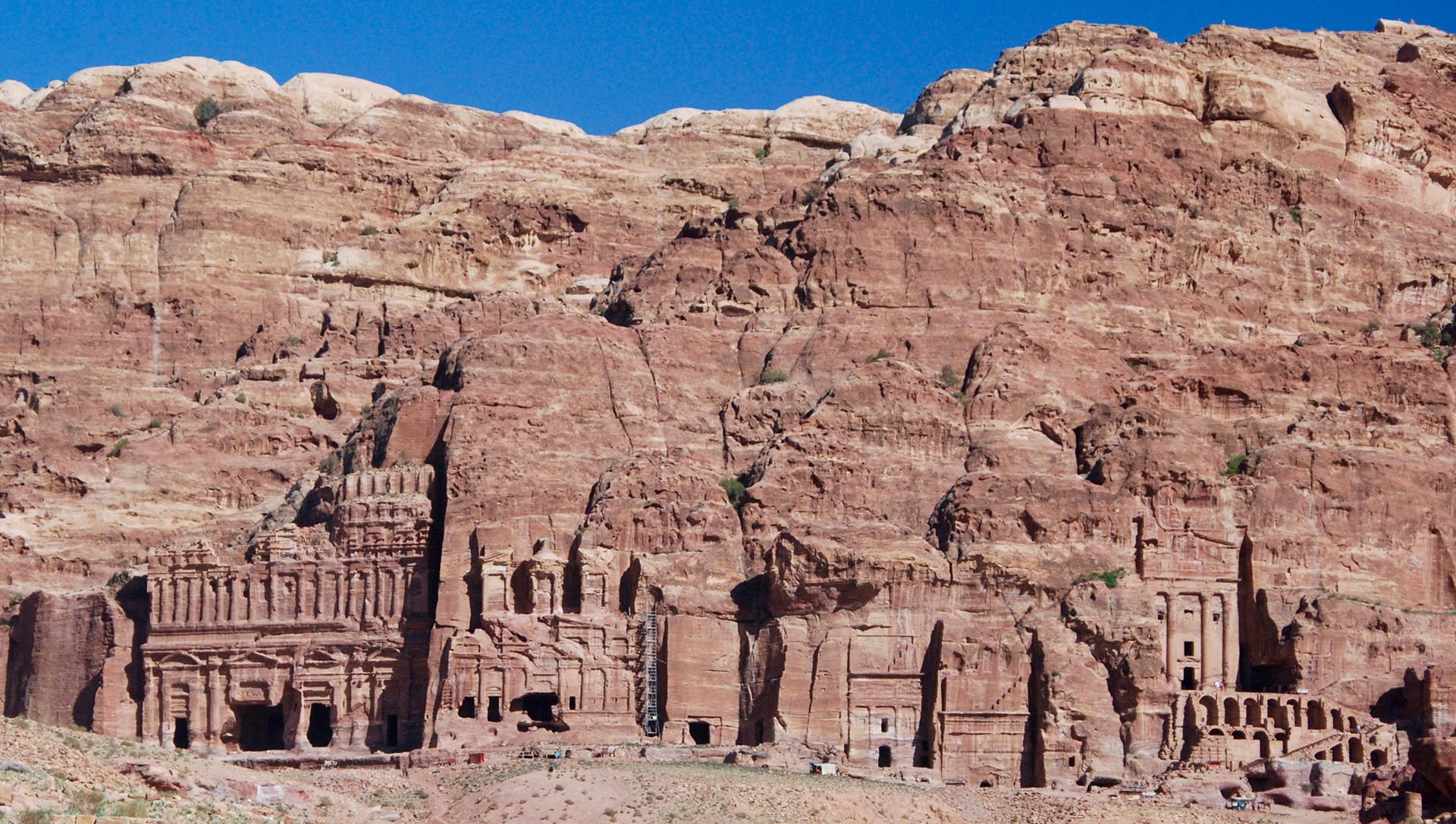
The site is considered significant by historians and archeologists alike because of its beautiful rock-cut architecture and innovative water management system, the latter of which made the region inhabitable, given that it is surrounded by desert and rugged, mountainous terrain.
Petra has also been referred to as the “Rose City” because of the color of the stones used in its buildings. It was named a UNESCO World Heritage Site in 1985.


In Rome, and take up their abode there; of these creatures, the first of which the Targum renders monstrous ones, and the latter wild cats, ( Isaiah 13:22): and the satyr shall cry to his fellow;
or the “hairy” one F18; from which word the goat has its name; and these creatures are described by the ancients as half goats and half men; of which ( Isaiah 13:21). The Targum renders it demons; and with this well agrees the account of Babylon or Rome as fallen, that it shall be the habitation of, devils, and the hold of every foul spirit, ( Revelation 18:2 ) : the screech owl also shall rest there, and find for herself a place
of rest;
there being no inhabitants to disturb her. By the name “Lilith“, it appears to be a night bird, which flies and is heard in the night. The Jews call a she demon by this name, which, they say {s}, has a human face, and has wings, and destroys children as soon as born; and therefore the Jews, especially in Germany, write upon the four corners of the bed of a new mother, Adam, Eve, out Lilith F20; the same with the Lamia of the Romans; and so the Vulgate Latin here renders it.