
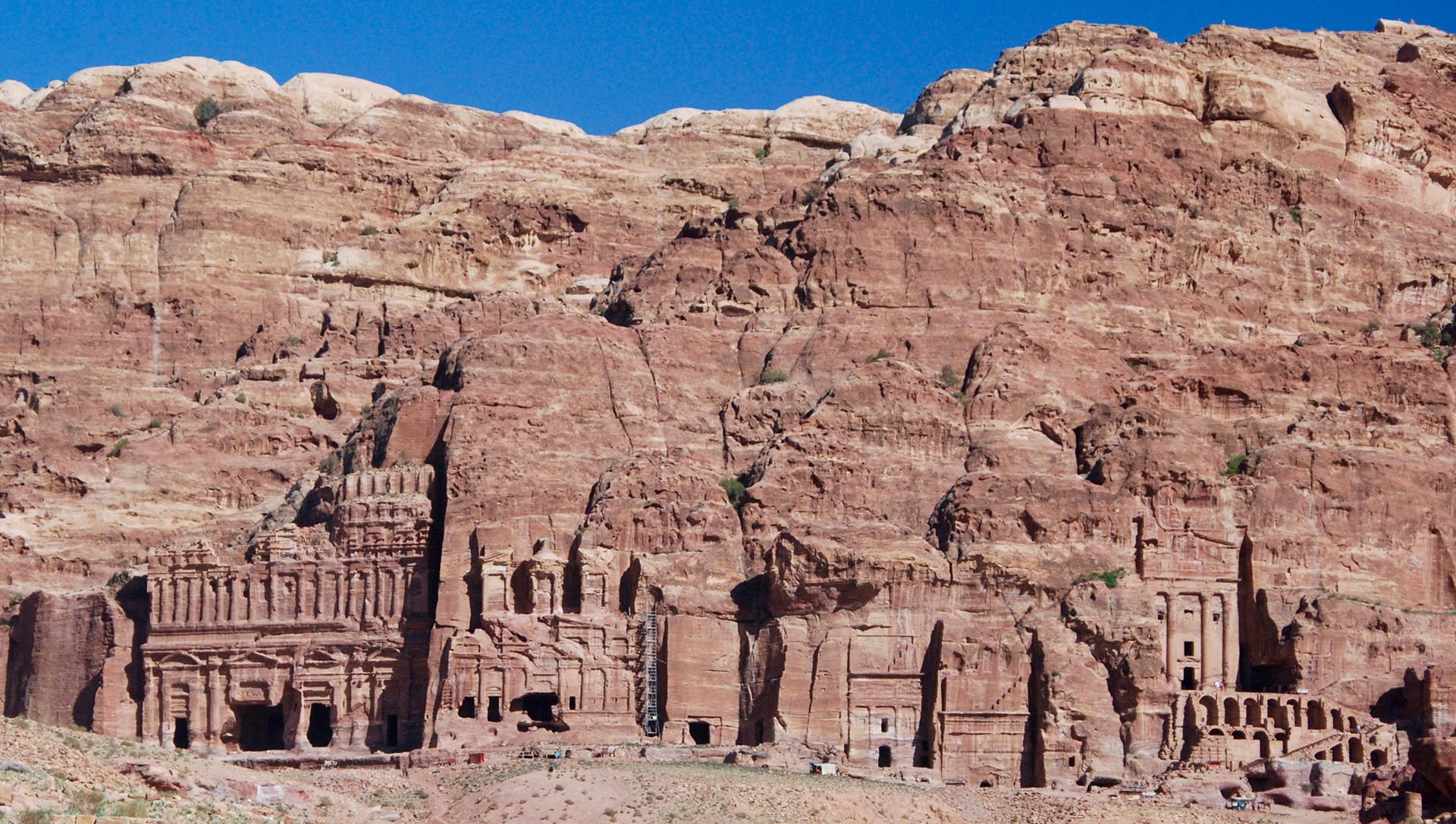
Then, in 1812, the unique ruins of Petra were “discovered” by Swiss explorer Johann Ludwig Burckhardt. He described the ruins of the once-great city in chronicles of his travels.
With the western world now aware of their existence, they soon attracted the interest of architects and scholars, among others. Starting in 1929, British archaeologists Agnes Conway and George Horsfield, as well as scholars Tawfiq Canaan and Ditlef Nielsen, launched a formal project to excavate and survey Petra.
Numerous findings have been made in the decades since, including the 1993 discovery of Greek scrolls dating to the Byzantine period as well as the more recent documentation via satellite imaging of a previously unknown monumental structure buried beneath the sands of the area.
When Petra was named a UNESCO World Heritage Site in 1985, Petra Bedouin tribespeople who had made homes for themselves within the city’s remaining ruins were forcibly relocated by the Jordanian government.
In the early 2000s, the site was named one of the “Seven New Wonders of the World,” leading to a spike in tourism. Since then, efforts have been made to protect the ruins of Petra from heavy tourism, as well as damage from floods, rain and other environmental factors.
–